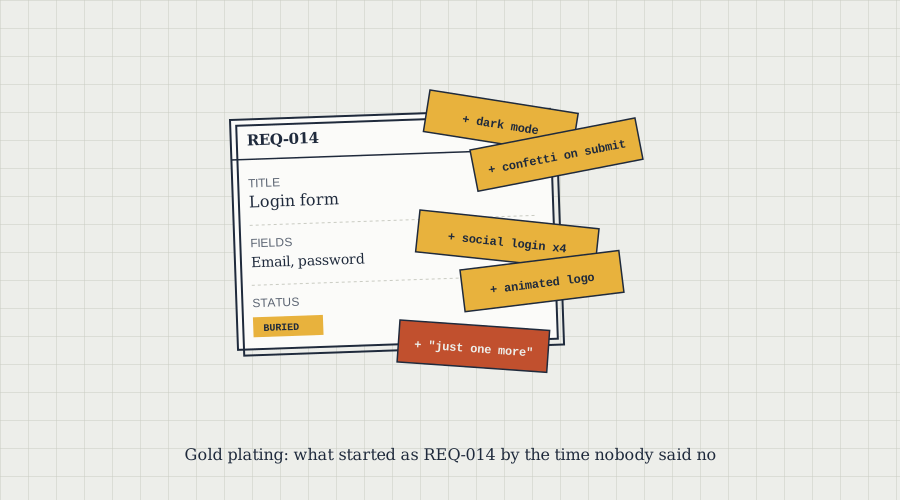
Have you ever been in a project that seems to be taking longer than necessary, even though the requirements were clear from the start? If so, you've experienced first-hand the costly and time-consuming problem of gold plating. This article looks at how requirements management tools can help you avoid gold plating in your projects.
What is Gold Plating in Projects?
When a project is said to be 'gold plated,' it means that it has been unnecessarily overbuilt or overloaded with features. This often happens when requirements are not well managed, and team members are allowed to add in their personal preferences without regard for the cost or impact on the project schedule.
Gold plating can be extremely costly in terms of money and time. It often leads to scope creep, as new features are constantly added on, and can result in a project that is late, over budget, and full of features that no one actually needs or wants.
Requirements management tools can help prevent gold plating by clearly and concisely tracking and managing requirements. With these tools in place, it becomes much easier to see when team members are starting to add in their personal preferences and to reign them back in before the project gets out of control.
Causes of Gold Plating in Projects
Gold plating in projects is often the result of poorly managed requirements. When requirements are poorly understood or properly tracked, it's easy for project teams to add unnecessary features and functionality to meet stakeholder expectations.
There are several ways to avoid gold plating in projects, but one of the most effective is to use a requirements management tool that helps you capture, track, and manage project requirements throughout the software development lifecycle. This visibility into project requirements helps prevent scope creep and ensures that only essential features and functionality are included in the final product.
Risks and Challenges of Gold Plating
- Projects may exceed their budget or timeline due to gold plating.
- Gold plating can result in scope creep as project teams strive to add more features or functionality than what was initially requested.
- Gold-plated products may not meet the customer's needs, as they may be too complex or feature-rich for the intended purpose.
- Gold plating can lead to poor quality products, as teams rush to complete the project without adequate testing or quality control measures.
- Gold plating can create tension and conflict within project teams as members compete for credit and recognition for their work on the project.
Benefits of Requirements Management Tools
There are many benefits of requirements management tools, but here are the top three: they can help prevent scope creep and gold plating; they can improve communication between stakeholders; and they can help you stay organized and on track.
How do you implement requirements management tools in projects?
Requirements management software helps project teams avoid gold plating by providing a central repository for all project requirements. By using these tools, teams can track which requirements have been met and which are still outstanding, helping prevent scope creep and keep the project on track.
There are a number of different requirements management tools on the market, so it's important to choose one that will fit the needs of your specific project. Some factors to consider include:
- Ease of use: the tool should be easy for team members to use, even if they're not familiar with requirements management tools. Otherwise, adoption will be low, and the tool won't be used to its full potential.
- Integration with other tools: the requirements management tool should play nicely with different tools that your team is using, such as project management software or document collaboration tools.
- Price: a more expensive tool may be a better investment if it saves your team time and money in the long run.
Best Practices for Requirements Management
A few best practices can help you avoid gold plating in your projects. First, ensure you have a clear and concise requirements document outlining all the features and functionality you need. Second, use a requirements management tool to track and manage requirements so all stakeholders have visibility. Finally, communicate regularly with all stakeholders about the project requirements so everyone knows the latest changes.
Conclusion
Gold plating can occur when requirements aren't clearly tracked and communicated. Using requirements management tools as part of a broader discipline of clear documentation and regular stakeholder communication is an effective way to keep project scope in check and ensure that no unnecessary features are added.