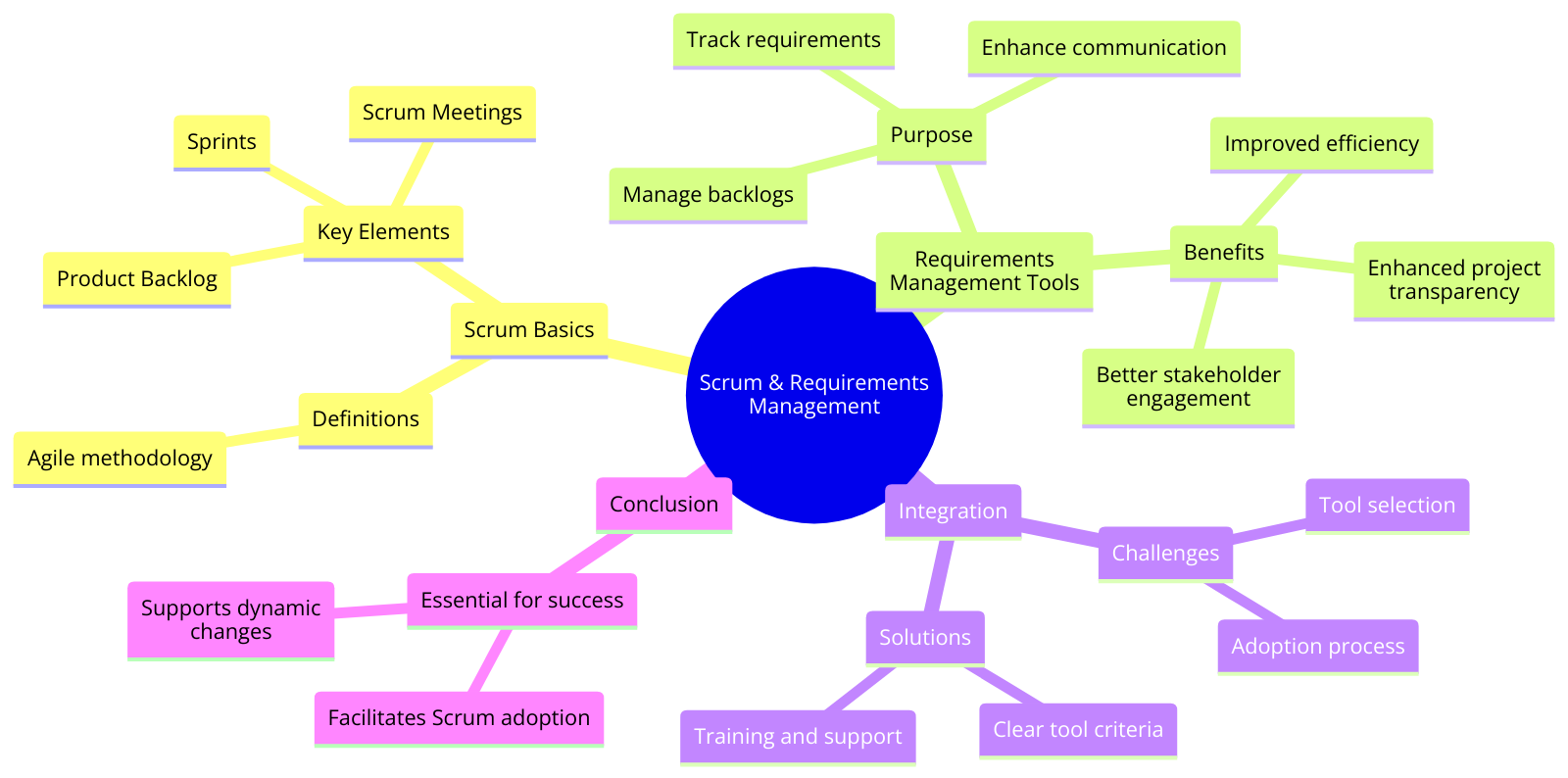
Self-organizing teams: Scrum teams are self-organizing, meaning they have the autonomy to decide how to best complete their work, allowing flexibility and adaptability. Emphasis on continuous improvement: at the end of each sprint, the team reflects on their processes and identifies ways to improve for the next sprint, ensuring constant evolution and progress.
Product Owner – responsible for defining and prioritizing the product backlog (list of tasks) and ensuring the final product meets customer needs. Scrum Master – responsible for facilitating meetings, removing impediments, and ensuring Scrum principles are followed. Development Team – responsible for completing the work in each sprint and delivering a working product increment. Overall, Scrum promotes a collaborative and adaptive approach to project management, allowing teams to quickly respond to changes and deliver high-quality products promptly.
Overall, using requirements management tools in Scrum projects can help make them more successful. They can improve communication, keep everyone on track, and ensure the final product meets all required requirements. Additionally, requirements management tools can help with prioritization. In a Scrum project, there may be many different requirements to address. By using a requirements management tool, you can prioritize the most important ones and focus on those first.
Another benefit is aiding collaboration. These tools often have features like commenting and feedback options, allowing team members to discuss and refine requirements together, improving overall quality and promoting teamwork. Furthermore, requirements management tools can provide transparency and traceability throughout the project. They allow for easy tracking of changes made to requirements, who made them, and when.
Overall, incorporating requirements management tools into Scrum projects can greatly enhance their efficiency, communication, collaboration, and success.
What are the drawbacks of not having requirements management tools?
Without requirements management tools, it can be difficult to track dependencies and changes between different teams working on a Scrum project, leading to delays and frustration as teams attempt to coordinate their work. Additionally, not having these tools can make it difficult to generate reports and assess project progress, making it challenging to identify issues early and make course corrections as needed.
- Lack of traceability: Requirements management tools provide a clear and organized way to track changes and trace requirements throughout the development process. Without these tools, keeping track of changes and ensuring all requirements are met can be challenging.
- Difficulty in prioritizing tasks: These tools often include features for prioritizing tasks based on importance and urgency. Without them, teams may struggle to determine which tasks should be completed first, leading to inefficiency and potentially missing important deadlines.
- Limited collaboration: Many requirements management tools have built-in collaboration features allowing teams to communicate and work together on defining and refining project requirements. Without these tools, communication may be less efficient, leading to misunderstandings or missed information.
- Inconsistent documentation: These tools often have templates and standardized formats for documenting project requirements. Without them, there may be inconsistencies in how different teams document requirements, making it difficult to compare and consolidate them.
- Increased risk of errors: Manually managing project requirements without specialized software increases the risk of human error, leading to missed or conflicting requirements.