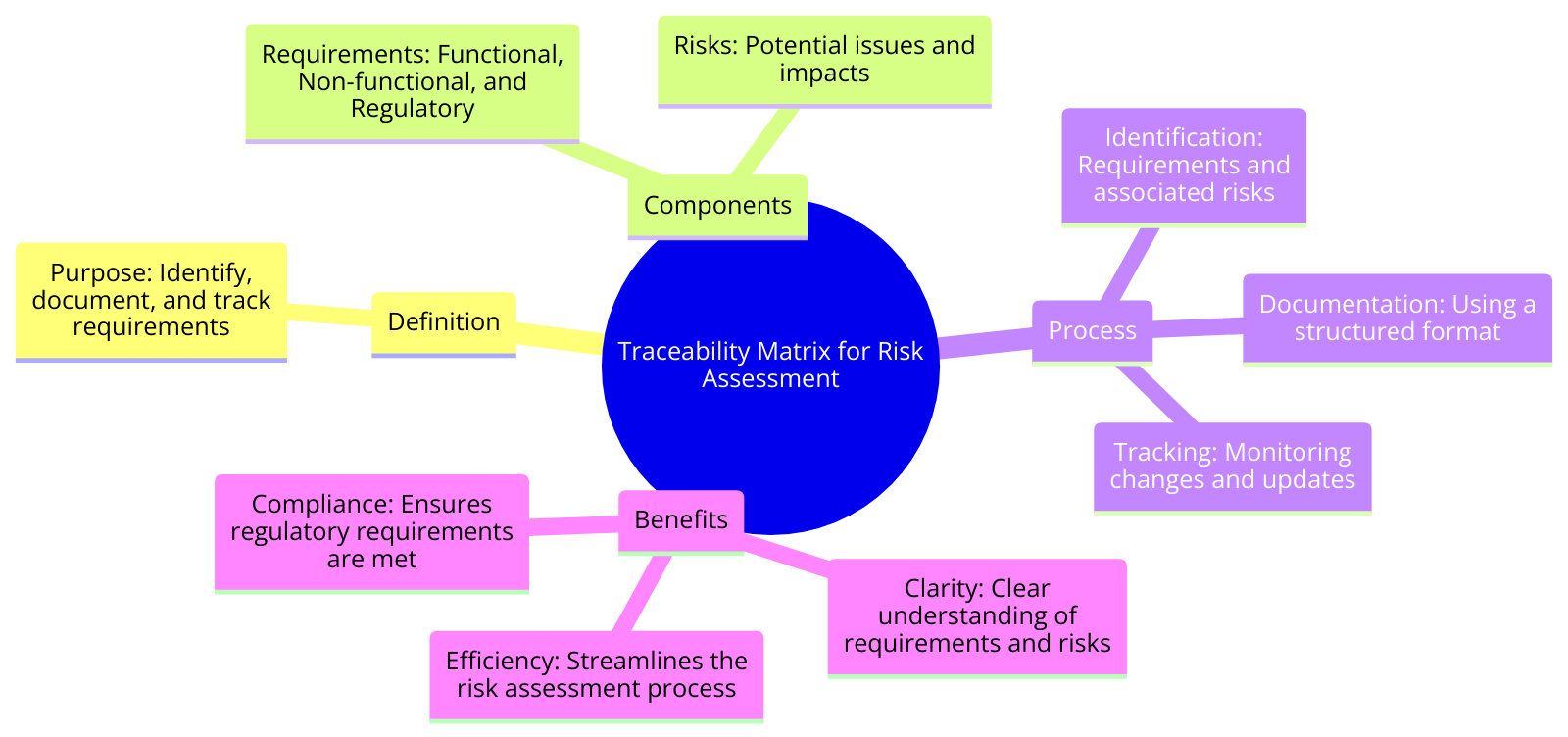
Are you tired of feeling overwhelmed by the endless risks of managing complex projects? Do you struggle to keep track of potential issues and their impact on your project's success? Look no further than a traceability matrix — an invaluable tool for effective risk assessment.
A traceability matrix links requirements, design elements, test cases, and other project artifacts together, so you can see at a glance what depends on what — and what breaks if something changes. For risk assessment specifically, that visibility is the whole point: you can trace a risky requirement forward to every piece of the project it touches, or trace a defect backward to the requirement that introduced it.
Building the matrix starts with capturing requirements clearly enough to link them to something else — a test case, a design spec, a deliverable. From there, the matrix becomes a living record: as requirements change, the links show you exactly what else needs to be re-reviewed, re-tested, or re-approved.
Used well, a traceability matrix turns risk assessment from a periodic, manual exercise into something closer to a built-in feature of how the project runs — catching gaps and orphaned requirements before they turn into missed deliverables.